Care Is the New ROI: How We Design Brand Experiences That Stay With People
When Joy Is Not Enough
Years ago, I directed events I was genuinely proud of. They looked beautiful. People enjoyed them, took photos and shared them online. And then, a week later, I realised that nothing had really changed. The guests had liked the experience, but it had not shifted how they thought, felt or behaved.
It was memorable but it was not meaningful.
That is a painful realisation for any marketer or creative professional: something can look successful and still leave no lasting impact. Over time, this became one of the questions that shaped the way I think about events: what makes a live experience stay with people after the lights go down?
Of course, people come to events for joy. For lightness, connection and emotion. “Sharing joy” is one of YEP’s core principles. But joy alone is not enough.
Today, many events offer what I call formal joy: a polished experience with all the right elements, but no real story underneath. A venue, a stage, a programme, a photo moment, a dinner. Everything works. Everything looks good. But once the event is over, the feeling disappears with the Instagram Stories posted that night.
In a market as active as Dubai, this matters even more. Audiences attend launches, conferences, festivals and brand activations every week. A brand is not only competing with other events. It is competing with event fatigue, fragmented attention and the feeling that people have already seen it all.
And this is where the difference begins. When an event is arranged like a show without a story, it disappears. When it is built like a story, it stays. It creates a genuine emotional connection — not because people
were impressed for a moment, but because they understood why the moment mattered.
Why Stories Stay
Stories are not just a creative device. They are one of the oldest ways humans make sense of the world.
Long before we had stages, screens, brand activations or keynote speakers, people gathered around stories to understand danger, belonging, love, power, change and hope. A story gives emotion a structure.
It turns separate moments into meaning.
That is why, in live experiences, storytelling is not decoration. It is the thing that helps people understand where they are, why they are there and what the experience is asking them to feel.
In marketing, we often speak about B2B and B2C. We define the target audience, the segment, the decision-maker, the client, the guest. But in real life, every live experience is human-to-human first.
At YEP, we call this person Homo Eventicus: not a lead, not a demographic and not simply an audience member, but a human who experiences first and decides later.
They do not come only for the agenda. They come with an inner request: to feel confident, to feel connected, to feel part of something, to find clarity, to be inspired, or simply to feel that the experience was designed with them in mind.
This is why a meaningful event cannot begin with the stage, the running order or the photo wall. It has to begin with the human. It has to begin with a reason — a truth strong enough to turn a moment into a journey.
Insight Gives the Story a Reason to Exist
This is where insight comes in.
Insight-led thinking is familiar territory in advertising and digital. In events, it is still too often treated as optional — something that belongs to the campaign, not to the live experience. But an event needs insight just as much.
Without it, an event can still look good. It can be beautifully staged, perfectly timed and well produced.
But it rarely creates a shift. Insight is the truth behind the experience: the reason why this moment should matter beyond the event itself.
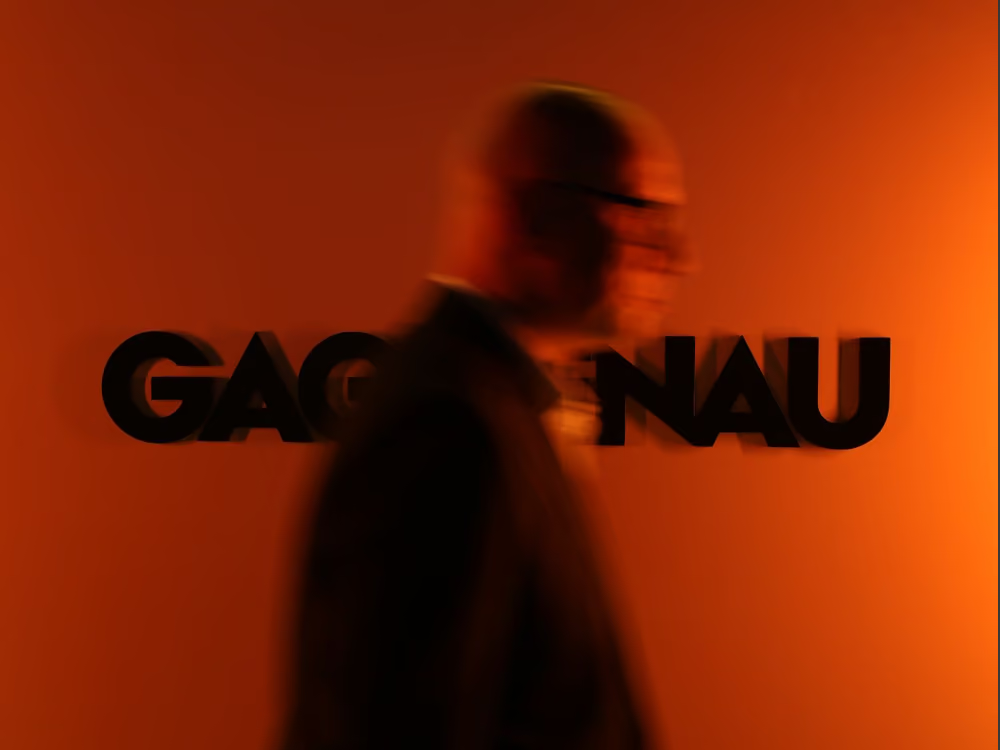
For Gaggenau’s Dubai flagship opening, we started by looking closely at what the brand actually creates.
Ovens, fridges, coffee machines and induction panels are not just appliances. In the hands of Gaggenau,
they become instruments for mastering temperature.
That became the insight: temperature shapes everything — the way we cook, taste, feel, see colour, experience light and sense space. From there, the story became clear: A Matter of Degrees. The event was built as a journey through cold, warmth and contrast, where guests did not just hear a message about precision and mastery.
They felt it.
That is the role of insight: it turns an event from a format into a reason.
Creativity as a Delivery System
Insight is not the idea. Insight is the fuel — the truth that gives the work a reason to exist.
The idea is the engine — the creative mechanism that turns this truth into a story people can feel.
And delivery is the road — the execution that decides whether the engine actually gets anywhere.
For Gaggenau, the insight was that temperature shapes everything. The idea became A Matter of Degrees.
But the story only worked because every decision carried it further: the spatial zoning, the culinary journey,
the contrast between cold and heat, the frozen bites, the ignited mocktails, the light, the pacing, the gifts guests took home.
This is how we think about creativity at YEP: as a system that connects human truth, brand message and live experience — so the idea does not stay in the presentation but becomes something people can move through, sense and remember.
Care Is a New ROI
So yes: fuel, engine, road. But even with a perfect car, you still need a GPS.
And this is one of the most underrated parts of any event: navigation, timing, clarity, and micro-decisions.
The things no one usually applauds. The things that often remain invisible. We call it care.
Care is not about adding “nice details” to an event. It is what makes the journey possible. It is about removing friction so people can actually be present. It is about designing for real human needs.
When I worked on the first IKEA integration inside a shopping mall, we could have created a standard media gift. Instead, we turned the iconic IKEA FRAKTA bag into a waist bag — a practical way for guests to keep their phone and essentials close, move freely and stay hands-free during the event. It was a small object, but it changed the experience. It was useful, recognisable and emotionally connected to the brand. And years later, people were still asking us to reproduce it.
People instantly feel the difference between being hosted and being processed. When you are hosted, the journey feels natural. You know where to go, what to do next and why you are there. When you are processed,
you become a task: queue, badge, seat, next.
That difference changes everything that comes after: trust and willingness to engage.
So, hospitality is our language, and tenderness is a new punk!
That is what care does when it is designed well: it stops being a detail and becomes part of the memory.
It turns a one-time moment into repeat demand — and repeat demand is retention.
That is why, at YEP, we say care is the new ROI.
From Moment to Journey Map
But care only creates value when it is designed across the whole journey — not left to chance.
At YEP, we map every meaningful brand experience across five stages: anticipation, arrival, immersion, peak
and afterglow.
Anticipation begins before the guest enters the room. The tool here is communication: an invitation, a message
or a first detail that creates clarity, intrigue and a feeling of being expected.
Arrival is the threshold. The tool here is flow: simple navigation, a human welcome, a clear first action
and an immediate sense of “I know where I am.”
Immersion is where people live the idea. The tools are space, content, interaction, performance, taste, sound, rhythm and emotion — everything that helps the concept become physical. Peak is the moment of meaning.
The tool here is focus: one sharp message, one designed emotion, one reason to remember.
Afterglow is what happens next. The tools are memory and continuation: photos, follow-up, content, a gift,
a conversation or a reason to return. That is how an event becomes more than a programme. It becomes a journey people can carry with them.
Delivery Protects the Story
And then reality happens. Budgets shift. Timings move. Queues grow. VIPs arrive early. Suppliers run late.
A venue says no. In events, something always goes wrong. The difference between a good event and a great one is not the absence of problems. It is whether the guest ever feels them.
That is why delivery is not just execution. Delivery is where the story is protected.
The practical rule is simple: protect the flow and protect the non-negotiables. Flow means guests always know where to go, what to do next and why it matters — even when the plan changes. Non-negotiables are the two or three moments that carry the meaning of the whole experience. If you lose them, you do not lose a detail.
You lose the strategy.
So before every event, we ask two questions at each stage of the journey: where can friction happen,
and what must never break?
Project thinking is about how it should work. Delivery thinking is about how it actually feels. And care lives exactly in between.
What People Take With Them
In the end, the real outcome of an event is not the room, the programme or the photos.
It is what changes in the person. A feeling. A decision. A clearer idea. A new connection. A story they want to tell someone else. This is what drives retention, advocacy, NPS and brand love — not as abstract metrics, but as human consequences.
So the next time you brief an event, do not start with the stage. Start with the human. Find the insight. Turn it into a story. Build the story as a journey. And protect that journey with care.
At YEP, we do not just run events. We design experiences that help brands move people.